
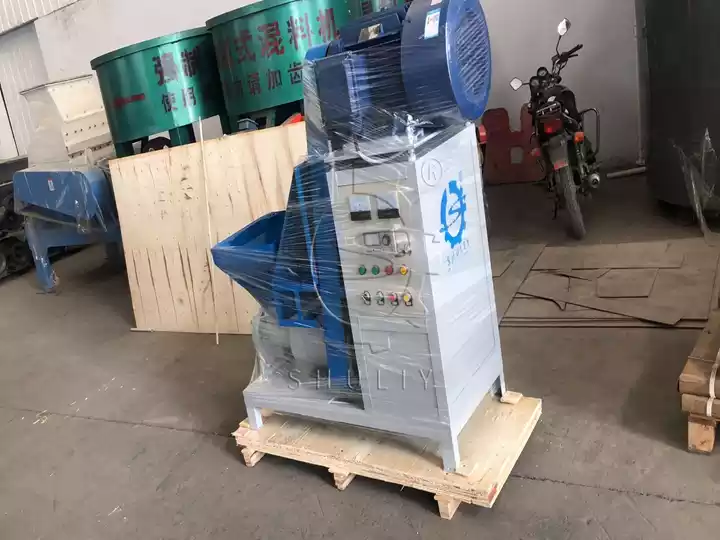
One unit of wood log briquette maker has passed factory testing and finished export packaging. The machine is loaded into the sea‑going container for delivery to Germany. This biomass equipment converts sawdust and wood scraps into high‑density fuel briquettes to support the client’s local renewable fuel business.
Customer background and project requirements
The German customer runs a biomass recycling business that collects sawdust, wood chips and wood waste from local sawmills. Driven by strong European market demand for eco‑friendly bio‑fuel, the client intends to produce wood briquettes for home heating and barbecue raw materials.
After supplier comparison, the customer chose our wood log briquette maker. Our engineers verified local power standards and workshop conditions, adjusting the configuration to meet EU safety specifications for steady long‑term operation.
Core features of the wood log briquette maker
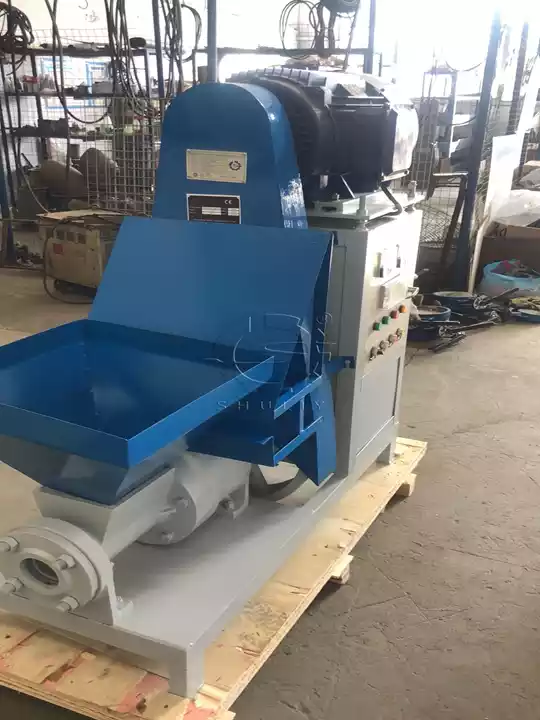
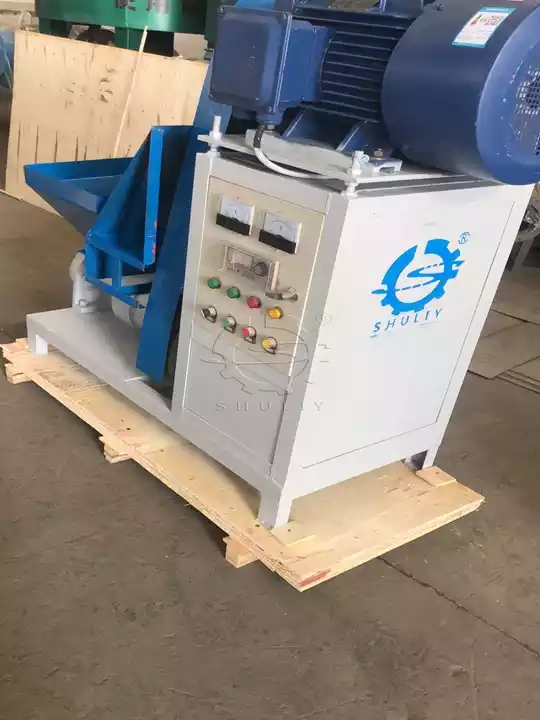
Isto wood log briquette maker uses screw thermal‑extrusion technology. It relies on wood’s natural lignin for binding, no chemical adhesives needed.
- Accepts raw materials including sawdust, wood shavings and dry wood residues
- Replaceable dies to produce briquettes of different sizes
- High‑density finished briquettes with good calorific value and low ash content
- Wear‑resistant key components for continuous production
- Equipped with safety protection and emergency‑stop devices adapted for Germany’s working environment
It turns low‑value wood waste into sell‑able biomass fuel and fits local circular economy requirements.
Pre‑shipment testing and confirmation
Prior to packing, we completed no‑load and material simulation running tests. Technicians checked extrusion performance, forming quality and safety functions. Test photos and videos were sent to the German customer for final approval. All spare wear parts and installation tools were sorted and labelled, together with English operation documentation.
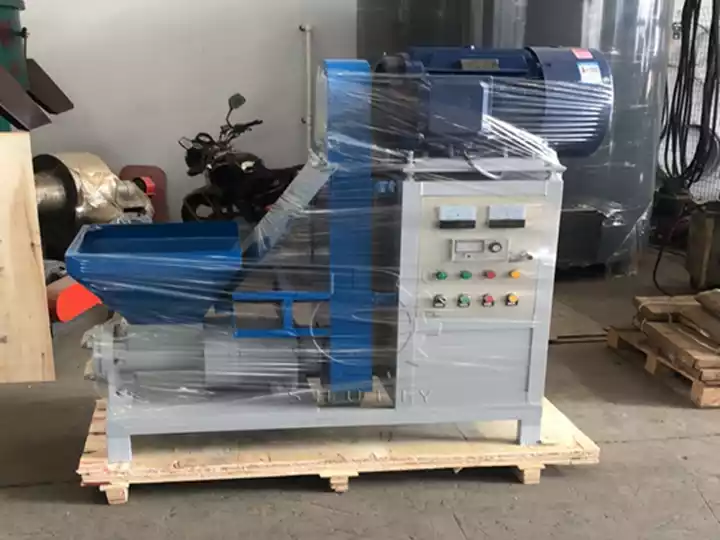
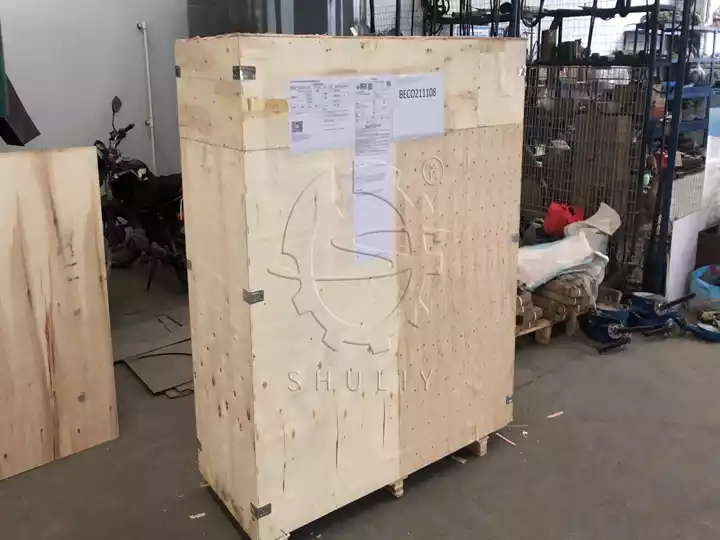
Export packing and container loading scene
The machine was cleaned and metal surfaces received anti‑rust treatment. Precision parts such as motors and dies were wrapped with shock‑proof and moisture‑proof materials.
Main equipment and accessories were packed into heavy‑duty export plywood crates, then firmly fixed inside the container to avoid shifting during ocean transit. Our team captured full loading records: empty container shot, reinforcement details, spare‑part placement and seal number close‑ups, and shared these materials with the customer.
After‑sales support
Full English installation, operation and maintenance manuals are provided. Our team offers remote online guidance for assembly, parameter setting, die replacement and daily troubleshooting. Wear‑resistant spare parts are available for long‑term stable production.