
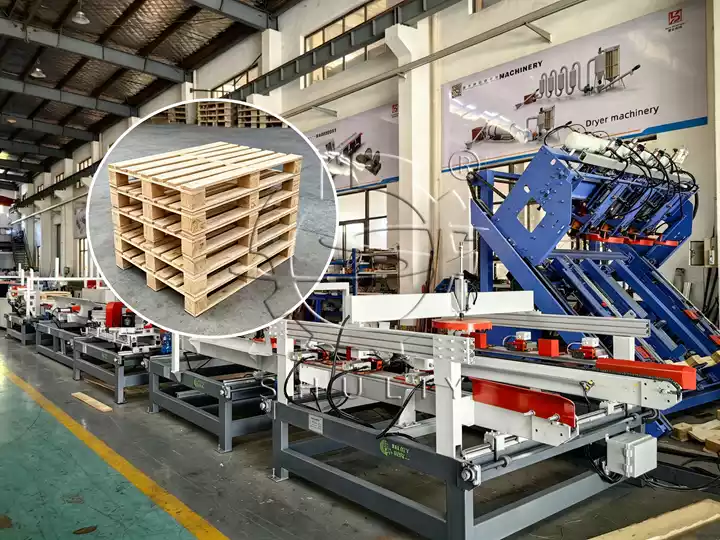
In the competitive wood packaging industry, controlling raw material expenses is a top priority for manufacturers. An automated pallet production line has emerged as a game-changer, not only boosting efficiency but also significantly reducing material waste. For businesses using wood pallet making machines, upgrading to a fully automatic pallet assembly line can transform cost management and enhance long-term profitability.
Precision cutting minimizes wood waste
Manual pallet production often leads to excessive offcuts and measurement errors, wasting valuable raw materials. Advanced wood pallet manufacturing equipment in automated lines uses precise laser-guided cutting, ensuring every piece of wood is utilized optimally.
This accuracy reduces scrap rates by up to 30%, directly cutting down the need for fresh wood supplies. Even small leftover pieces can be repurposed for pallet components, maximizing material efficiency.
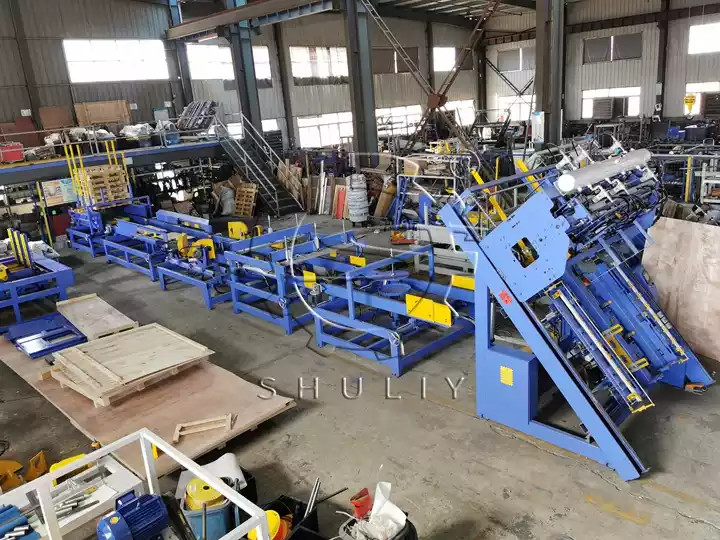
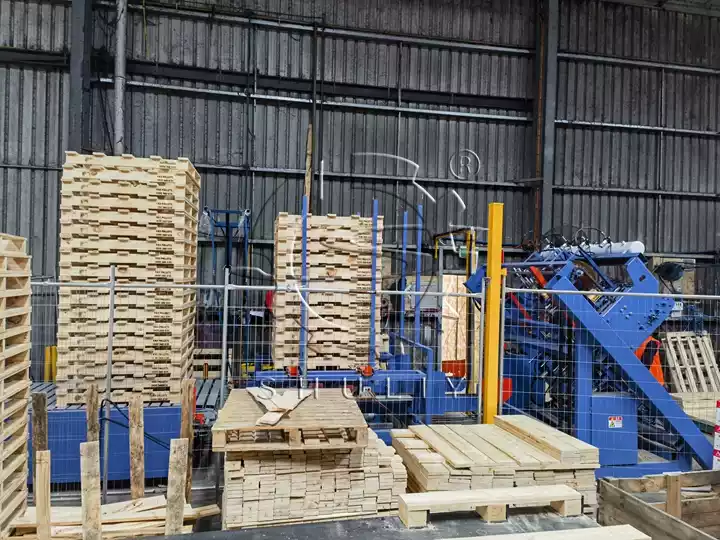
Automated pallet production line cost: long-term savings
While the initial automated pallet production line cost may seem higher than manual setups, the long-term savings in raw materials far outweigh this investment.
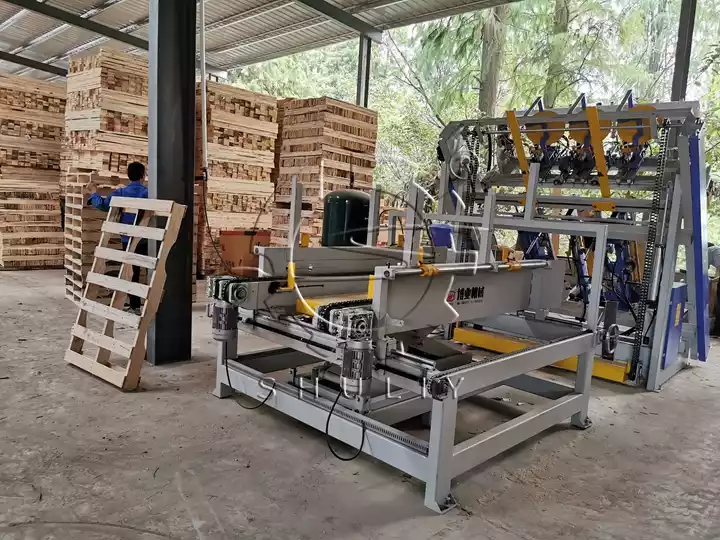
High-output wood pallet making machines integrated into the line handle large volumes with consistent accuracy, lowering material costs per pallet. For small to medium factories, a turnkey pallet production solution streamlines operations, eliminating redundant processes that waste wood and other resources.
Waste recycling boosts cost efficiency
Modern wood pallet production machinery supports waste wood recycling, a key factor in cost reduction. These systems process recycled wood scraps into viable raw materials for new pallets, reducing reliance on fresh timber. This not only cuts material costs but also lowers waste disposal expenses. Sustainable practices like this also appeal to eco-conscious clients, adding long-term value to the business.
Consistent quality reduces rework
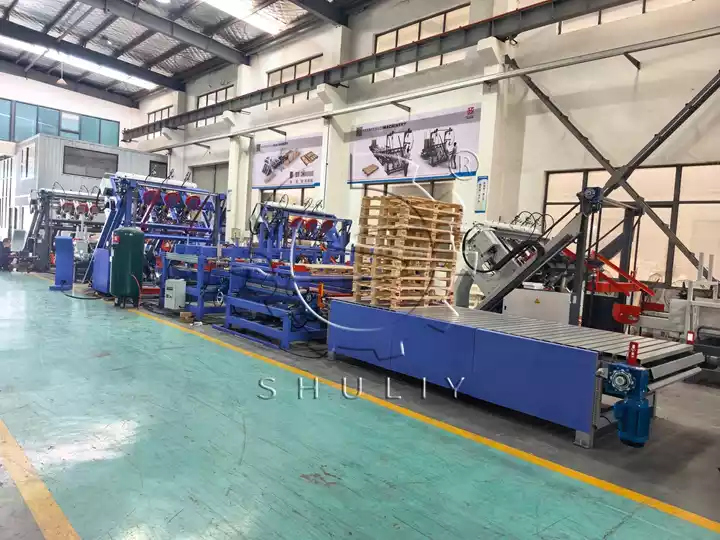
Automated lines ensure uniform pallet quality, eliminating defective products that require rework or material replacement. Unlike manual operations, which often produce inconsistent pallets, automatic assembly lines deliver precise, durable pallets every time.
This reduces the need for extra raw materials to fix mistakes, further optimizing material usage and lowering overall automated pallet production line costs.
In summary, investing in an automated pallet production line is a strategic move to control raw material expenses. By minimizing waste, optimizing material use, and enabling recycling, these systems deliver substantial long-term savings. For manufacturers looking to stay competitive, upgrading to efficient wood pallet making equipment is a crucial step toward sustainable cost management and business growth.